
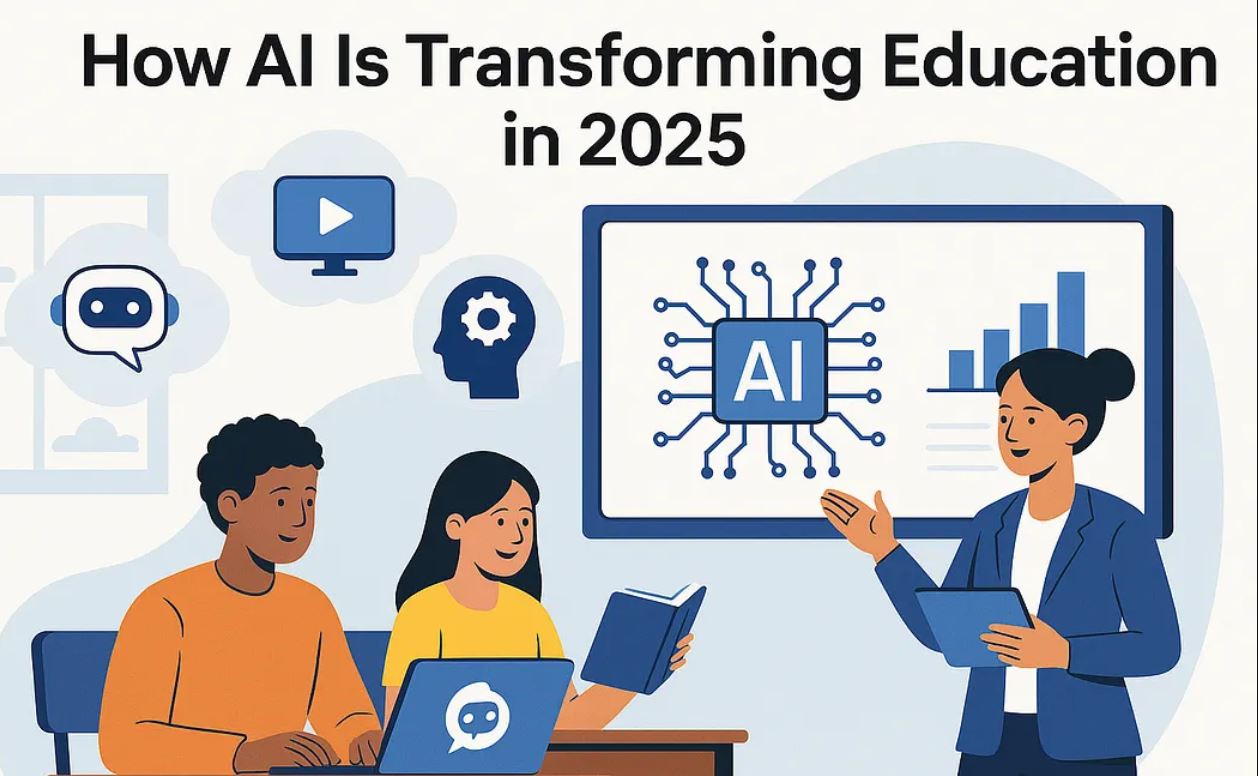
Artificial Intelligence (AI) is no longer a futuristic concept—it’s a present-day reality reshaping industries worldwide, especially education. In 2025, the integration of AI tools in education has accelerated dramatically. From personalized learning experiences to automated administrative tasks, AI is redefining how teachers teach, how students learn, and how institutions operate. This article explores the key ways AI tools are transforming education, the benefits they bring, the challenges they pose, and what the future could look like.
1. Introduction: The Rise of AI in Education
The adoption of AI in education has been driven by rapid technological advancements, increased availability of digital data, and a growing need for individualized learning. AI tools use data-driven algorithms to deliver personalized learning content, assess student performance, and provide real-time feedback—making education more effective, adaptive, and accessible than ever before.
In 2025, AI is embedded at every level of the education system, from kindergarten classrooms to university research centers, and across online learning platforms. The rise of generative AI models like chat-based assistants has further accelerated this transformation by offering interactive and intelligent support to learners and educators alike.
2. Personalized Learning for Every Student
One of the biggest advantages of AI in education is personalized learning. Traditional education often follows a one-size-fits-all approach, which can leave some students behind while others are unchallenged. AI tools change that by adapting content in real-time based on individual needs.
Adaptive Learning Platforms
Systems like intelligent tutoring tools analyze student performance continuously and adjust lessons accordingly. If a student struggles with a specific topic, the AI can provide remedial lessons or alternate examples. Conversely, students who learn quickly can be offered advanced tasks and enrichment content.
Benefit: Learner-Centered Education
This personalized approach helps in:
-
Improving learning outcomes
-
Boosting student confidence
-
Reducing achievement gaps
With AI, education becomes student-centered rather than curriculum-centered.
3. Intelligent Tutoring Systems and Virtual Teaching Assistants
Another major transformation in 2025 comes from AI-powered tutoring systems and virtual teaching assistants. These tools simulate one-on-one tutoring and provide support 24/7, even outside the classroom.
AI Tutors
AI tutors can:
-
Explain concepts in simple language
-
Provide step-by-step problem-solving guidance
-
Answer questions instantly
-
Offer practice exercises tailored to the student’s pace
This kind of support is especially valuable in subjects like mathematics, science, and languages where students often need repeated practice and detailed explanations.
Virtual Teaching Assistants (VTAs)
VTAs help teachers by:
-
Handling routine queries
-
Grading homework or quizzes
-
Highlighting students who may need extra help
Teachers save time on administrative tasks and focus more on creative instruction and mentorship.
4. Smart Content and AI-Generated Learning Materials
AI tools can generate high-quality digital content, such as:
-
Interactive textbooks
-
Multimedia presentations
-
Practice quizzes
-
Simulations and visualizations
These are automatically adapted to student learning levels, interests, and preferences.
For example, an AI application might generate:
-
A custom practice worksheet for algebra
-
A science simulation for chemistry concepts
-
A reading comprehension exercise based on a student’s favorite topic
This reduces the workload for educators and provides students with dynamic, engaging content.
5. Real-Time Assessment and Feedback
Traditional assessments often require human grading and feedback, which can take time. In 2025, AI tools provide instant assessments and progress tracking.
Real-Time Insights
AI platforms analyze student responses and offer:
-
Instant performance feedback
-
Suggestions for improvement
-
Identification of learning gaps
-
Predictive analysis of future performance
For teachers, this means having deeper insights into classroom performance and tailoring instructions accordingly. For students, instant feedback accelerates learning by highlighting mistakes and correcting them immediately.
6. Automation of Administrative Tasks
AI isn’t just helping learners and educators—it’s also transforming school operations.
What Can Be Automated?
-
Enrollment processing
-
Scheduling classes
-
Attendance tracking
-
Grading and reporting
-
Communication with parents
By automating repetitive administrative tasks, institutions save time and resources, allowing staff to focus on strategic initiatives that enhance education quality.
7. Enhanced Accessibility and Inclusion
One of the most impactful benefits of AI in education is improved accessibility for diverse learners, including students with special needs.
AI for Accessibility
-
Speech-to-text and text-to-speech tools
-
Real-time captioning
-
Language translation for multilingual learners
-
Customized interfaces for students with visual or motor impairments
These tools ensure that every student, regardless of background or ability, has equal access to learning opportunities.
8. Challenges and Ethical Considerations
Despite the advantages, AI in education also brings challenges.
Data Privacy and Security
AI systems rely on large amounts of student data. Protecting this data from misuse and ensuring privacy is crucial.
Bias and Fairness
If AI tools are trained on biased data, they may produce unfair recommendations. Ensuring fairness and avoiding discrimination in AI decisions is a major concern.
Human Touch Still Matters
AI can support instruction, but it cannot replace human empathy, mentorship, and social interaction. Effective implementation requires a balance between technology and human engagement.
9. Preparing Teachers and Learners for an AI-Driven Future
To make the most of AI tools, educators and students need proper training.
Teacher Training
Training teachers in AI literacy ensures they can effectively:
-
Integrate AI responsibly
-
Interpret AI-generated insights
-
Customize AI tools to classroom needs
Student Readiness
Teaching students how to use AI ethically and effectively prepares them for future careers where technology will be central.
10. The Future of Education with AI
Looking ahead, AI will continue to evolve. Emerging trends include:
-
AI-driven career guidance
-
Emotional intelligence recognition
-
Virtual and augmented reality learning
-
Predictive learning analytics
In 2025, AI isn’t just a tool—it’s a partner in education. As AI systems become more intelligent and more integrated into learning ecosystems, education will become more efficient, inclusive, and adaptable. Vistit:wheon com
Conclusion
AI tools are reshaping education in 2025 by making learning personalized, assessments instant, administrative tasks automated, and content dynamic. While challenges like data privacy and ethical concerns remain, the benefits of AI in education are undeniable. With proper implementation, training, and oversight, AI has the potential to revolutionize education globally.
